
What Does Copper Sulfate Do to Pool Water?
Pool owners are discovering an algae-killing compound that makes clearing up overgrowth easier than ever. Copper sulfate (CuSO4) is a chemical compound that purifies pool water by killing things like algae, bacteria, fungi, and other unwanted living particles in a pool environment. However, it should be used carefully and strategically for the best and safest results. Come learn how copper sulfate in pool water works against algae infestations.
What Is Copper Sulfate?
Copper sulfate is an algaecide and disinfectant that’s made from combining copper with sulfur. Its strength is ideal for tackling algae and bacterial overgrowth that is too extreme to be treated by ordinary pool chemicals. Copper sulfate is often commercially sold under the label of bluestone due to its vivid blue coloration.
What Happens During Copper Sulfate Pool Treatment?
Copper sulfate works by binding to proteins in algae in pool water. This binding power essentially “chokes” the cells within the algae to prevent photosynthesis. The cells within the algae will eventually break down and die.
If you have fuzzy green growth in your pool that’s turning everything slimy and cloudy, it’s probably algae. Most experts suggest only using copper sulfate when you’re at risk for algae overtaking your pool. However, some pool owners who have had algae issues in the past choose to proactively use copper sulfate every so often to stop algae before it even starts.
Many people who hear about copper sulfate wonder if they need to use it if their pools are chlorinated. The answer is that copper sulfate is not intended to be a replacement for chlorine. It is actually intended to work alongside chlorine to amplify its benefits. Pools need chlorine for daily sanitation. However, chlorine can sometimes fail to neutralize algae blooms. Algae types like black algae and mustard algae can be too aggressive and stubborn for chlorine alone once they take hold of pool water. This is where copper sulfate can come in to amplify the effects of chlorine.
During treatment for algae, copper sulfate shifts the pool’s pH to make the environment inhospitable for algae. A big benefit of copper sulfate is that its effects last for quite a while. Unlike many pool treatments, it won’t evaporate or dissolve after a few hours. Copper sulfate can stay active in pool water for up to a few weeks.
Should Copper Sulfate Be Used Often in Pools?
Copper sulfate pool treatments are not intended to be used as part of regular chemical pool maintenance. This is considered a specialized treatment that should only be used in situations where algae growth is out of control. The reason why copper sulfate isn’t ideal for ordinary pool care is that it can dramatically shift the alkaline level of pool water.
Can Copper Sulfate Harm Pools?
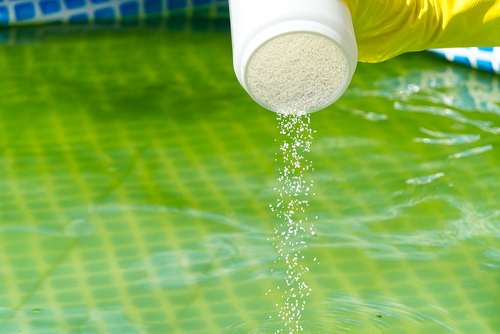
Yes, it’s possible for copper sulfate to be harmful if it’s used incorrectly. It’s important to read the label of copper sulfate pool sanitizer to ensure you’re adding the correct amount. The compound should always be dissolved in a water bucket first instead of being poured directly into a pool. If too much is used, this can turn the walls of the pool green. Swimmers may also notice that their hair turns green with excessive copper sulfate. It’s also important to handle copper sulfate carefully because exposure to undiluted amounts can cause eye irritation, nausea, vomiting and other negative symptoms. Keep copper sulfate away from pets.